One card
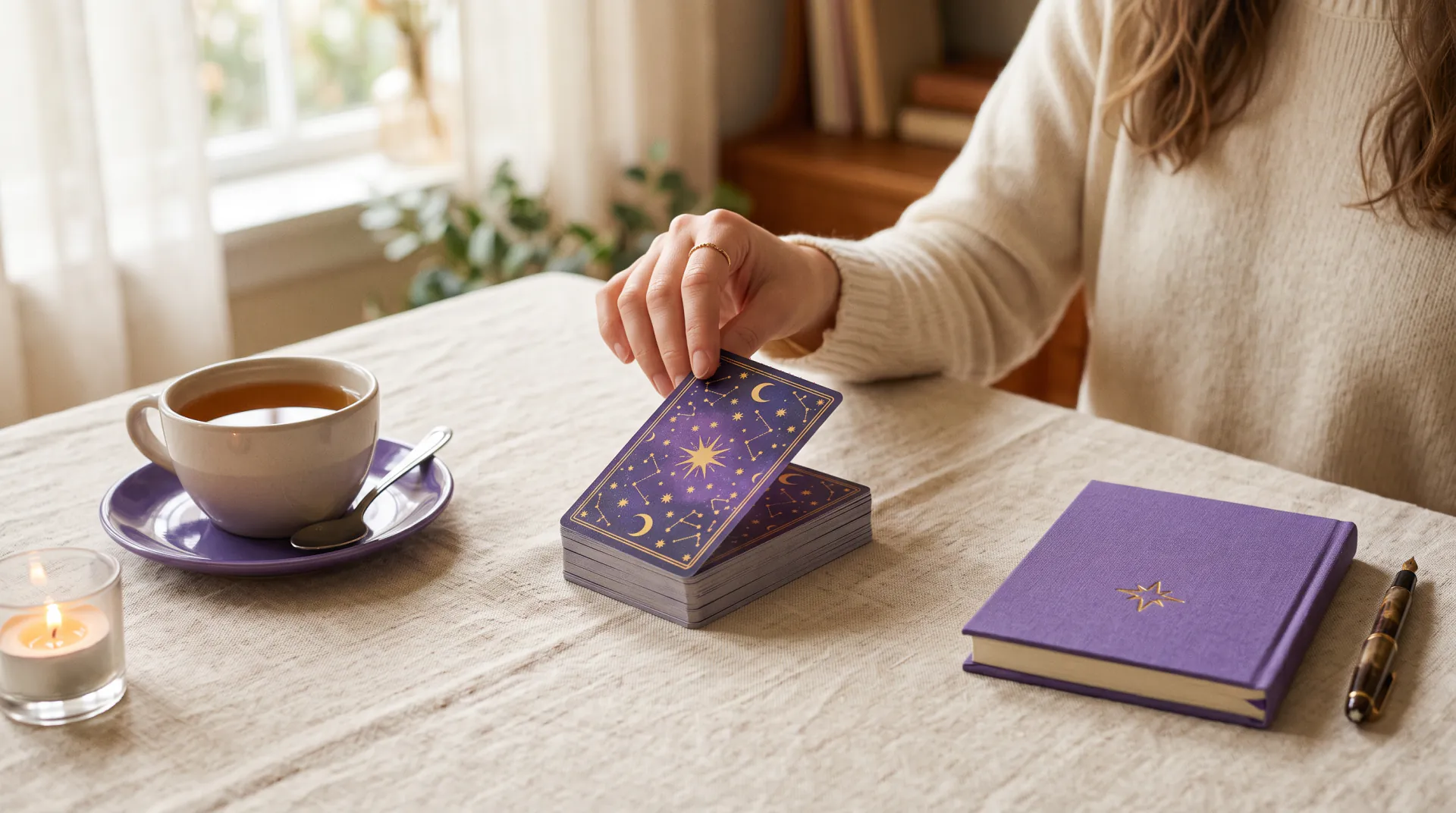
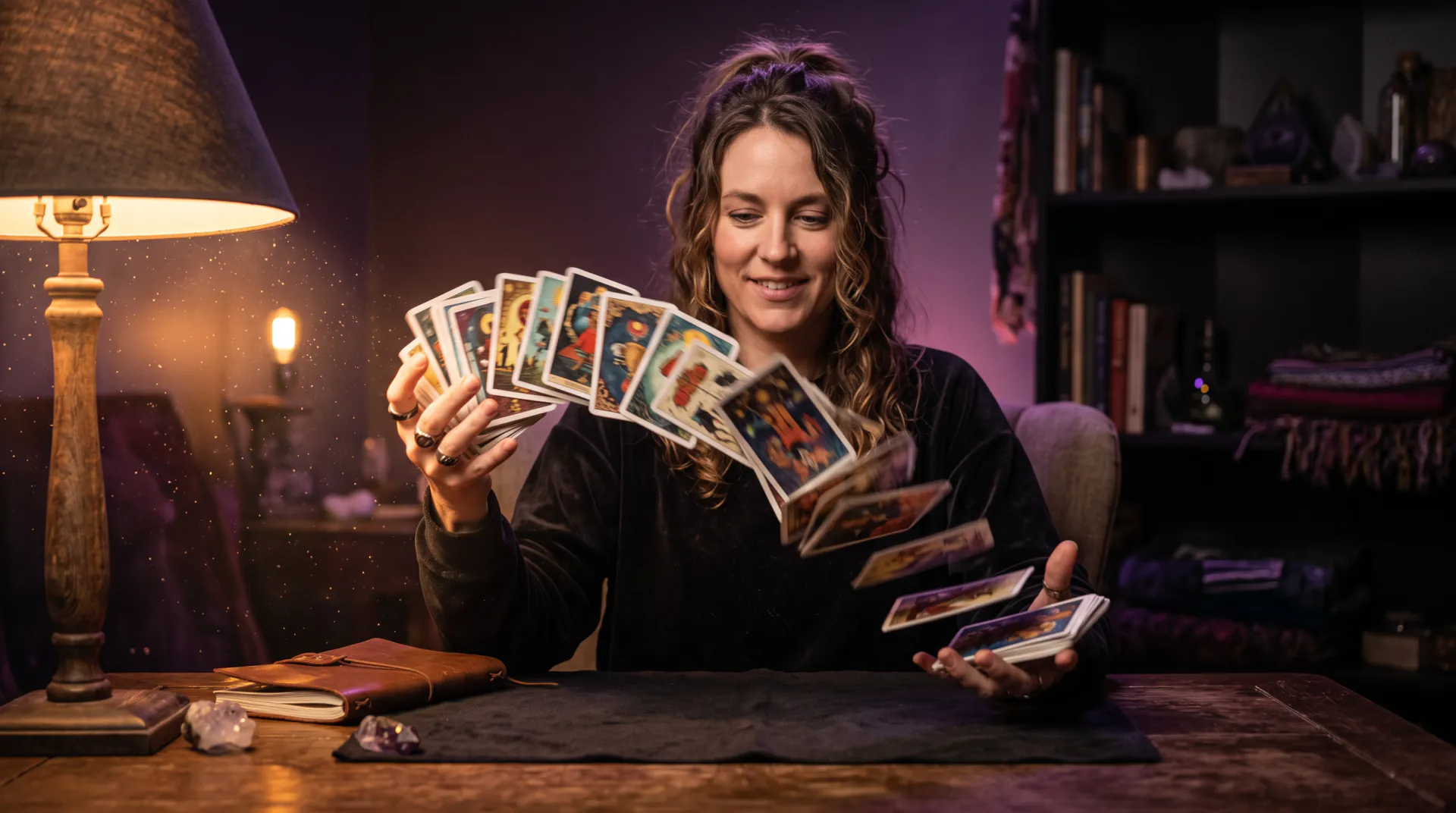
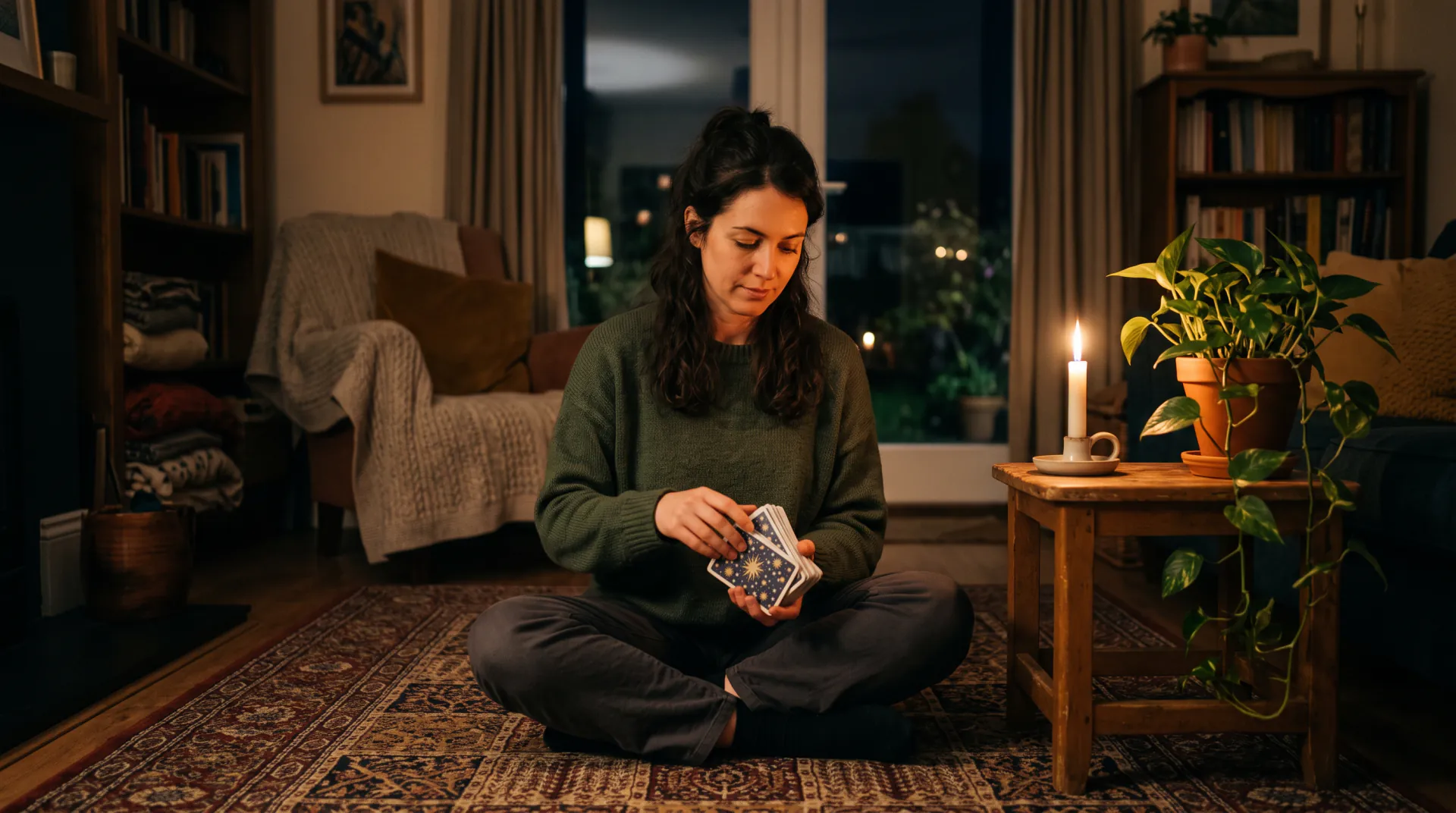
One position: a single card as a focus for your question or your day. The simplest spread and the best way to learn the cards.
Six layouts
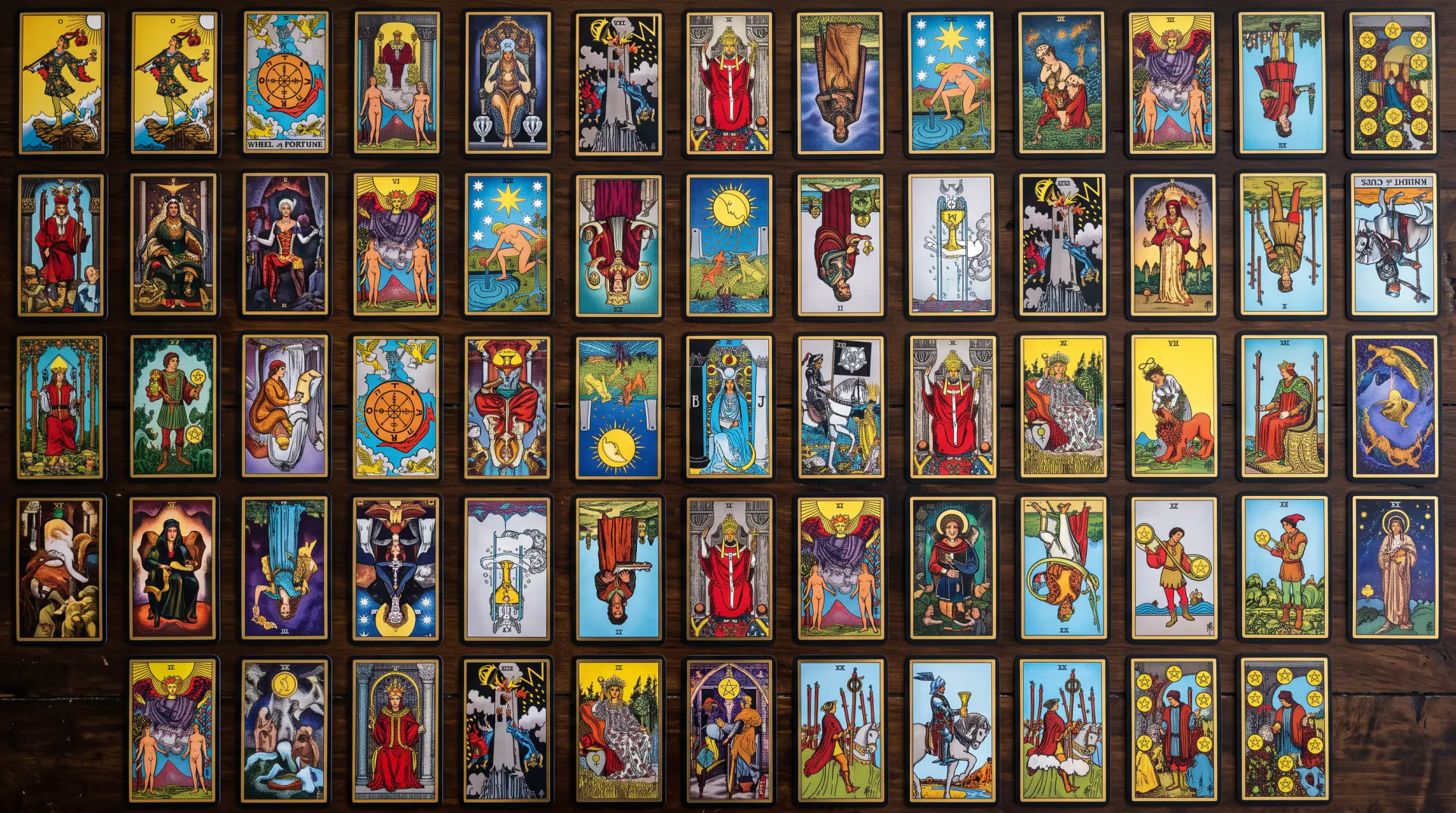
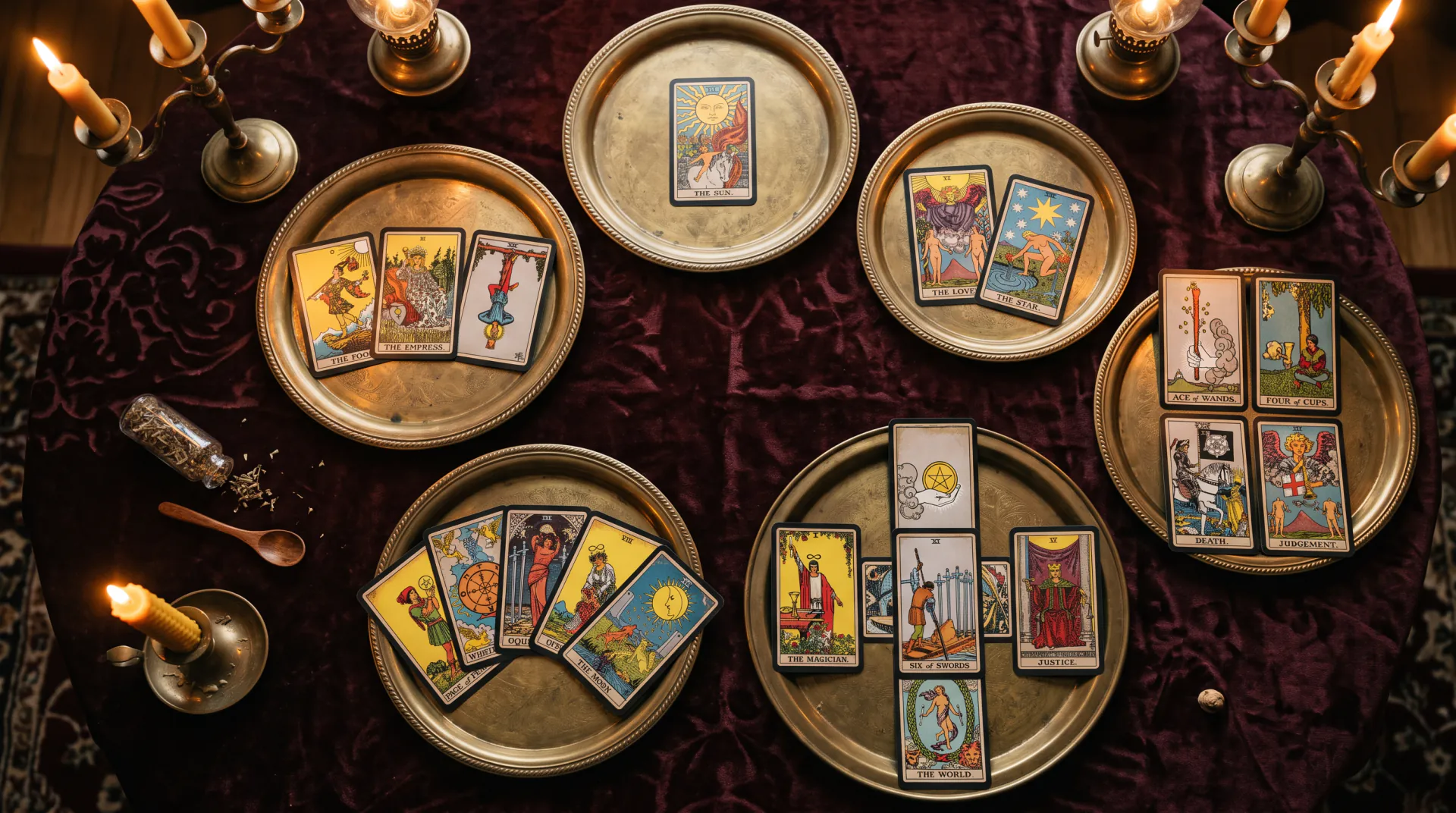
A spread is the pattern the cards are laid in, and each place in it asks its own question. Here are the six spreads the reading tool offers, with every position, so you can choose one or lay it out with your own deck.
A tarot spread gives each card a position with its own meaning, such as past, present or future. AI Tarot Reading offers six: one card (5 credits), yes or no (5), three cards for past, present and future (10), a five-card love spread (15), a five-card career spread (15) and the ten-card Celtic Cross (25). The positions below are free to use with any deck.
Closed questions suit yes or no; open questions suit three cards or more.
Love and career spreads have positions written for those parts of life.
One card takes a minute to read; a Celtic Cross deserves a quiet half hour.
Choose the spread whose positions ask what you want to know.
One card per position, in order, upright or reversed.
Interpret every card in its position, then look at how they connect.
One position: a single card as a focus for your question or your day. The simplest spread and the best way to learn the cards.
One position, plus an answer: the card gives Yes, No or Maybe according to our published list, and the reading explains why.
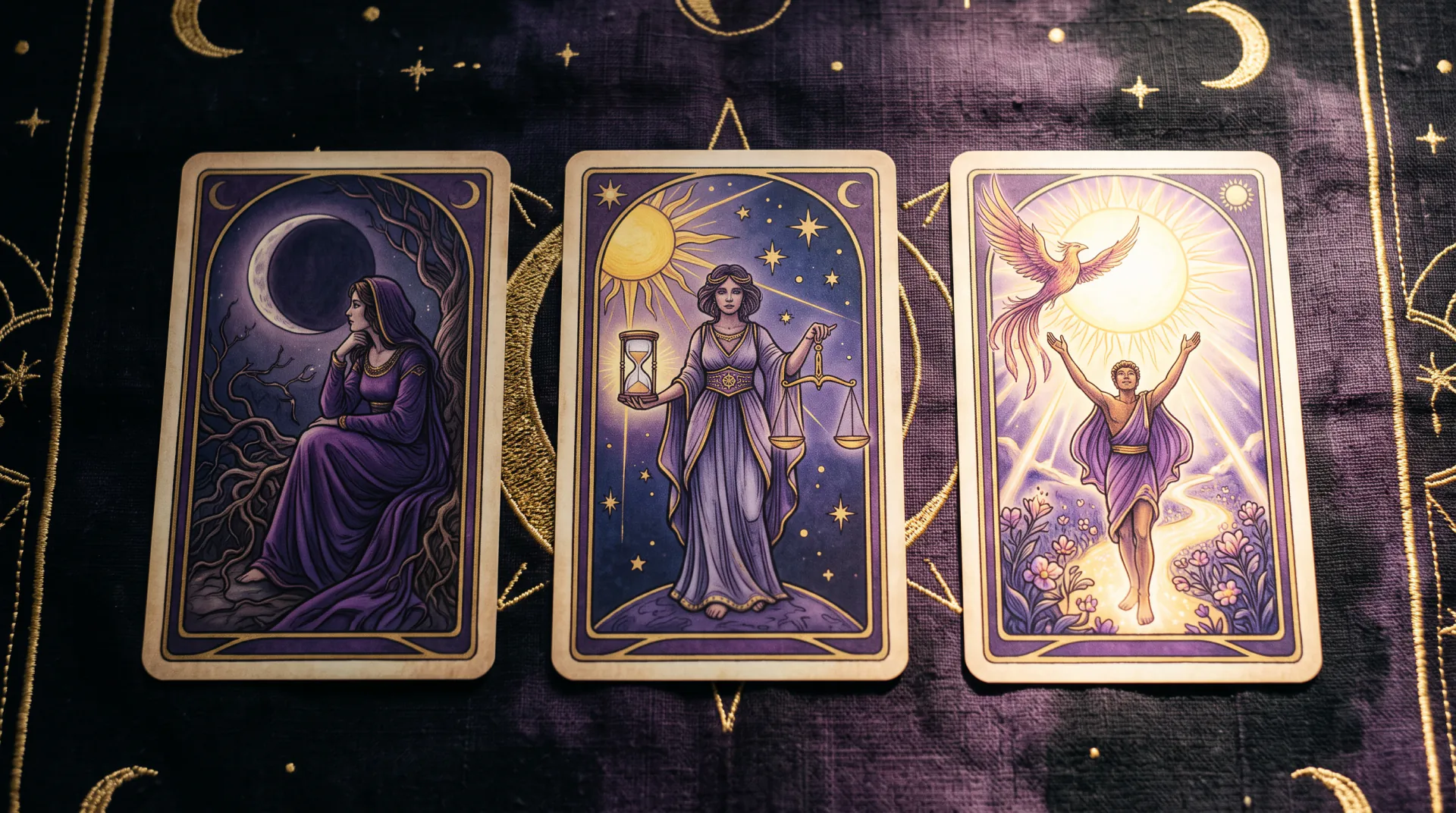
The classic three-card spread shows how a situation is developing:
Five cards for a relationship, or for the love you hope to find if you are single:
Five practical cards for work, skills and next steps:
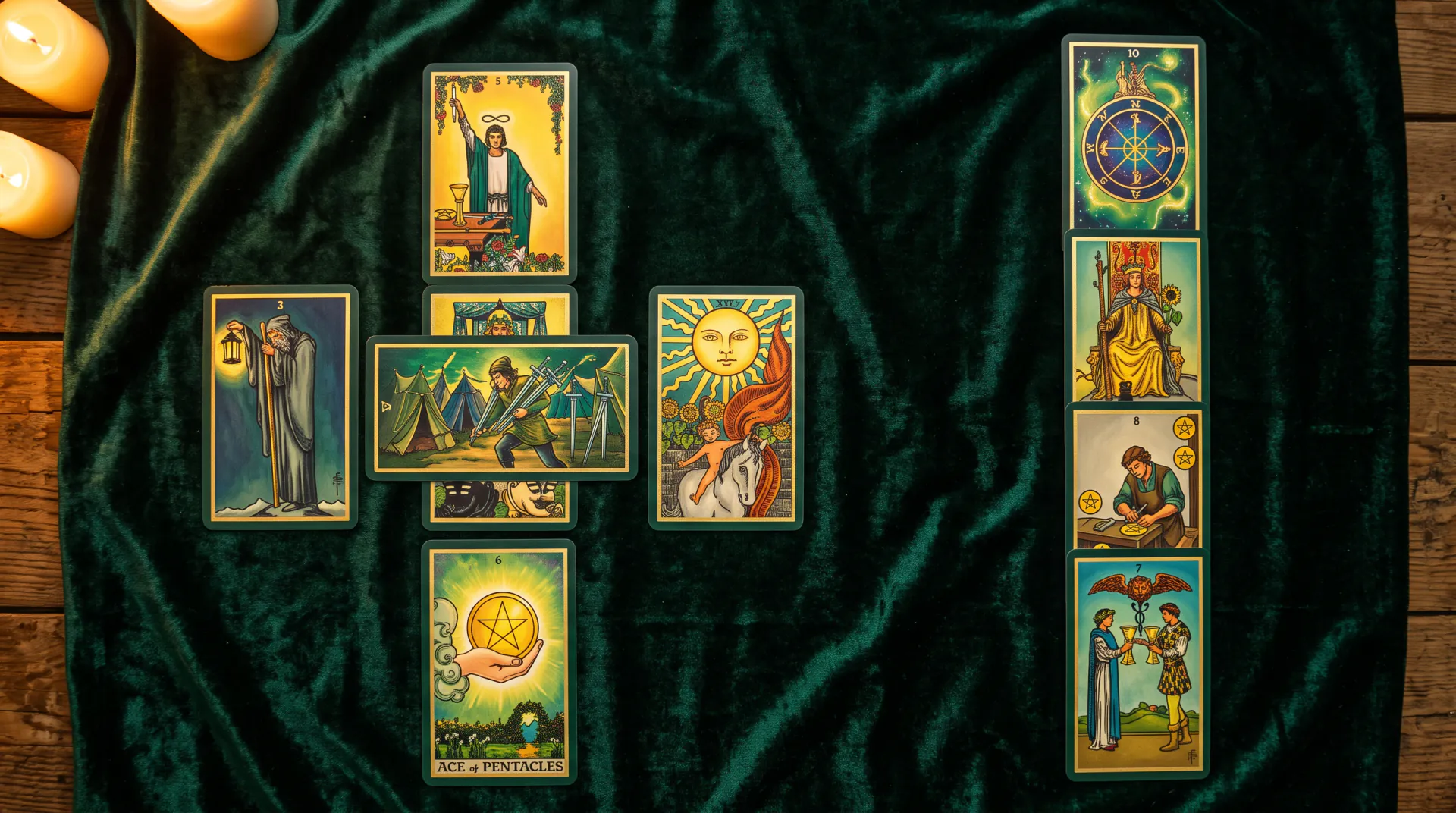
Ten cards that look at a situation from every side; the Celtic Cross page explains each position in detail.
| Cards | Best for | Credits | |
|---|---|---|---|
| One card | 1 | A daily focus or a quick question | 5 |
| Yes or no | 1 | A closed question | 5 |
| Three cards | 3 | How a situation is developing | 10 |
| Love | 5 | A relationship or finding love | 15 |
| Career | 5 | Work decisions and next steps | 15 |
| Celtic Cross | 10 | Big questions with many sides | 25 |
Start with one card, then move to three cards for past, present and future. Both are small enough to read card by card and still see how the cards connect.
Anything from one to the whole deck, but most everyday spreads use one, three, five or ten cards. The six spreads here use one, one, three, five, five and ten.
Yes. The positions on this page are free to use: shuffle, lay one card per position in order, and read each card in its place.
The five-card love spread, which looks at you, the other person or the love you hope for, the connection, the obstacle and the direction. For a single closed question, use yes or no.
Readings cost 5 to 25 purchased credits, depending on the spread.
Last updated October 29, 2026